Fellows
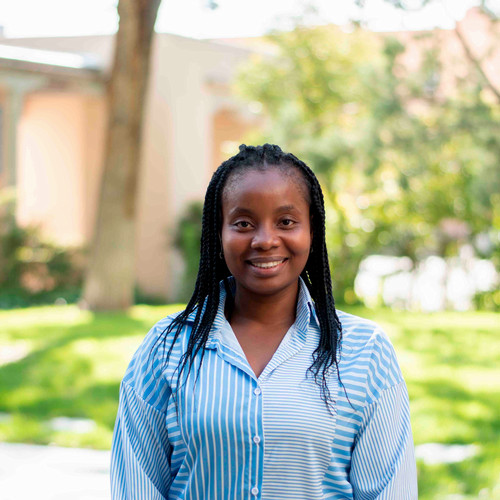
Abundance Fineman
M.A. in Spanish and Portuguese
Research Topics: Women, Migration, and the African Diaspora: Representations of African cultures, traditions, and identities in Brazilian and Hispanic literature.
Abundance is currently pursuing a Dual Master’s degree in Portuguese (Brazilian Literature) and Spanish (Hispanic Literature) at the University of New Mexico. She earned a Bachelor’s degree in French and Portuguese (Combined Honours) from Obafemi Awolowo University, Nigeria. Further, she enhanced her language skills through immersion programs at the Nigerian French Language Village in Badagry and the Universidade Federal da Bahia, Brazil. Her academic interests focus on Brazilian and Hispanic literatures, teaching, and translation. Before her graduate studies, she worked as a Strategic Intelligence Analyst at Bulwark Intelligence Solutions Limited in Nigeria, where she monitored and reported on real-time security incidents across West Africa for both corporate and individual clients.
At UNM, Abundance serves as a Portuguese Teaching Assistant, teaching introductory Portuguese with a focus on developing speaking, listening, reading, and writing skills through interactive activities. Her teaching experience spans multiple levels, from nursery and primary to secondary and university education, where she has developed strong skills in instruction, classroom management, and student support. Beyond academia, Abundance is committed to community engagement. She volunteers actively within the UNM community and serves as Program Coordinator for the Enslaved Child Help Organization in Nigeria, a role that allows her to contribute to social impact initiatives beyond the classroom.
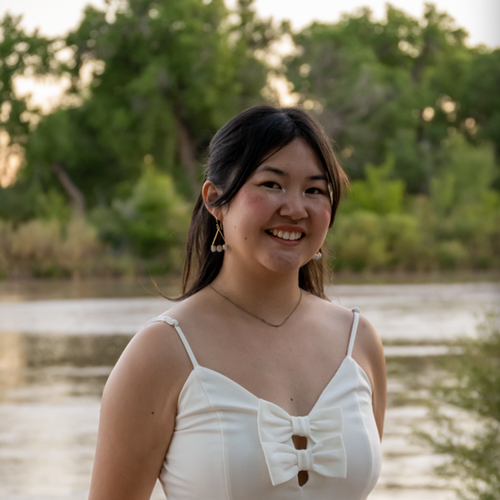
Charlotte Auh
M.A. in Chicana and Chicano Studies
Research Topics:
Hispanic & Asian American educational experiences | Curriculum development | Critical pedagogies | AsianCrit and LatCrit methodologies | Chicano/a
education and contemporary Chicano/a issues.
Charlotte Auh was born and raised in Albuquerque to a wonderful mixed-race Nuevomexicana and South Korean family. She is currently in the first year of her M.A. in Chicano/a Studies. She recently graduated from UNM as a double major in Honors Interdisciplinary Liberals Arts and Elementary Education. As an undergraduate, Charlotte was a Mellon Mays fellow where she researched the educational experiences of mixed race Hispanic-AsianAmerican, what she calls “Hispasian”, students in New Mexico. Her other research projects have included the construction of a nuclear-based 8th grade history curriculum and an analysis of Rudolfo Anaya’s student course evaluations during his tenure at UNM. Charlotte’s research methodologies are based in Critical Race Theory, specifically AsianCrit and LatCrit, and a desire to democratize institutional knowledge and integrate the work of the university with the work of the community. She is passionate about understanding and engaging with the academic identities and experiences of students of color through both a student perspective as a Hispasian student herself, and an educator perspective through coursework on critical pedagogies and field experience with students aged 3-18.
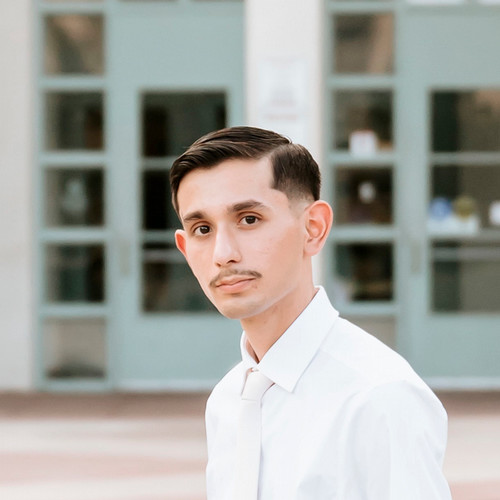
David López Amaya
PhD Student in Political Science
Research Topics: Immigration politics and Latino politics.
David is a 2nd year PhD student in Political Science at the University of New Mexico. His research examines immigration politics and Latino politics more broadly. He focuses on the effects of punitive immigration policies on immigrant well-being, the influence of policy environments on immigrant behavior, and political participation among immigrant communities. He also studies Latino political participation and behavior within the U.S. political system.Raised in northern New Mexico, David earned a BA in Political Science and Spanish and an MA in Political Science from the University of New Mexico. His academic background has shaped his commitment to understanding how political structures and policies affect immigrant and Latino communities. David’s goal is to produce research that both advances political science scholarship and informs broader discussions on immigration policy.
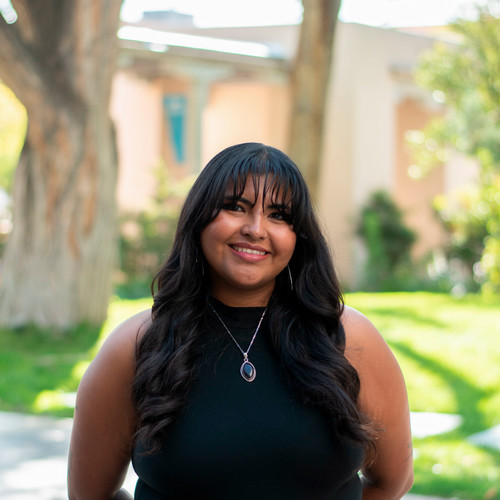
Ennedith López
M.A.in Latin America Studies &Master ofCommunity and Regional Planning (MCRP)
Research Topics:Howmatriarchal land stewardship challenges extractive economies and mitigates climate change.Theintersections of climate resiliency planning,climate, and Immigration Justice.
Ennedith López is a Xicana born and raised in Albuquerque’s International District, which has empowered her passion for community-based work and advocacy. Throughout her youth, she has been involved in a series of community roles focusing on various social justice issues ranging from Immigration Justice to Environmental and Climate Justice.
Ennedith graduated from the University of New Mexico, Summa Cum Laude with a Bachelor of Arts in International Studies and Spanish and a certificate in Race and Social Justice. At UNM, she participated in two exchange programs in Lima, Peru and Guadalajara, Mexico, which inspired her capstone research project on Femicides in Latin America. She later followed to become the 2021-2022 New Mexico Fellow at the Institute for Policy Studies (IPS). During her time at IPS, she has conducted research for the Mining, Trade, and Latin America project and Climate Policy project in urging New Mexico to transition away from fossil fuels. Recently, she completed work as the Policy Campaign Manager at Youth United for Climate Crisis Action (YUCCA) focusing on youth leadership development and holding institutions, industries, and policymakers accountable in the fight for a Just & Equitable transition.
Ennedith is motivated by public scholarship and determined to proactively work alongside communities to take action and address issues that impact them. Ennedith chose to pursue an MA in Latin American Studies and Masters in Community Regional Planning to better support communities impacted by systemic injustices.

Eresay Alcantar-Velasquez
M.S. Earth & Planetary Sciences
Research Topics: Organizational behavior, increasing workplace perceptions and career outcomes for minoritized employees.
Eresay is a Mexican-American bornand raised in Garden City, Kansas. In a town where water scarcity and prolonging the life of Ogallaaquifer has been stressed, Eresay took an interest intoa science career related to addressing water quality concerns. She received her Associates in Science from Garden City Community College and Bachelors in Geology with an Environmental Focus from Kansas State University.Her professional experience includes working with the Kansas Department of Agriculture as a Water ConservationSpecialist and is currently working with the United States Geological Survey- New Mexico Water Science Center as a Student Trainee Hydrologist. She is in the second year ofpursuing her M.S. degree in Earth and Planetary Sciences where she is studying the interfacial reactions between mine waste sediments and wildfire ash. The results of her research will serve to drive understanding implications related to metal mobility within surface water.As someone who is proud of her Mexican culture and understands the value of uplifting her community, she is grateful for the opportunity to pursue her academic interest with the goal helping otherswith similar cultural backgrounds excel in academia as well.

Kima Sibayan
Ph.D. in Sociology
Research Topics: Race & ethnicity, social inequalities, social determinants of mental health, racial trauma, deviance, poverty
Kima Sibayan is doctoral student in the department of sociology and criminology at the University of New Mexico. Kima is a born and raised Floridian and the daughter of two working class parents. She received her B.A. in interdisciplinary social studies, with focuses on sociology and global government affairs, from the University of South Florida. During her undergraduate program, she was committed to antiracism initiatives and social justice advocacy through community-based organizations in St. Petersburg, Florida. Now, she has dedicated her career to investigating the intersection of structural racism and the production of racial trauma. She has spent her life thus far unpacking what it means to be a financially adverse person of color in America, and how structural influences shape traumatic experiences throughout one’s life course. Does systemic and interpersonal racism impair one’s ability to cope with trauma? What social determinants impede one’s resilience to racial violence? Where is the intersection of poverty, racism, and trauma? These are questions which Kima wishes to address in her research pursuits. You can contact Kima through UNM department of sociology to discuss her research interest further.
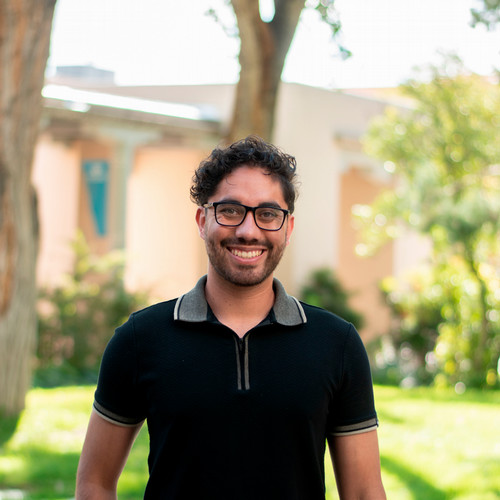
Luis Sánchez Martinez
PhD in Health Exercise and Sports Sciences (HESS)
Research Topics: Teacher socialization and mentoring doctoral students.
Originally from Mexico, Luis Sanchez Martinez is a doctoral student and teaching assistant for the Physical Education Teacher Education (PETE) at the University of New Mexico (UNM). Luis has studied at UNM since 2016, completing his B.S. in Physical Education and M.S. in Physical Education with a concentration in curriculum and instruction. Luis also has 4 years teaching K-12 and 8 years coaching experience Albuquerque. His dissertation work is on teacher socialization in Latin America, investigating the lived experiences of physical education teachers in Mexico, grounded in Occupational Socialization Theory. Luis’ goal is continuing to expand the Latin American qualitative research on teacher socialization while working teacher education program preparing pre-service teachers to work in K-12 schools.
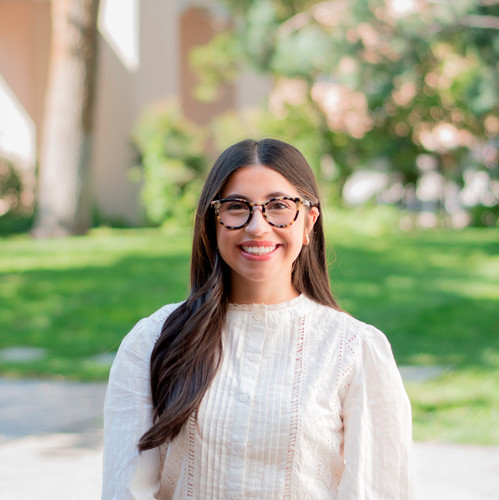
Michelle Almeida
M.S. in Cybersecurity and Business Analytics
Research Topics: The use of artificial intelligence in reverse engineering.
Michelle Almeida is a first-generation student, pursuing a Master’s degree in Cybersecurity and Business Analytics. She earned an undergraduate degree in Psychology with a minor in Business Administration from the University of New Mexico, graduating summa cum laude. She is currently a Business Graduate Intern at Sandia National Laboratories, supporting business operations within the Talent Acquisition division by streamlining processes, managing documentation, and contributing to projects that improve organizational efficiency. Her research interests focus on enhancing cybersecurity through reverse engineering and artificial intelligence, with an emphasis on social engineering and understanding human behavior. She hopes to study potential vulnerabilities and develop strategies to anticipate and mitigate cyber threats, combining technical and behavioral insights to address complex security challenges. Her psychology background informs her understanding of human behavior and social engineering, while her business training provides skills in problem-solving, project management, and strategic thinking. She is also the proud daughter of immigrants, carrying forward her family’s resilience and determination in all her endeavors. She looks forward to applying her research in reverse engineering and AI to advance cybersecurity initiatives at Sandia.
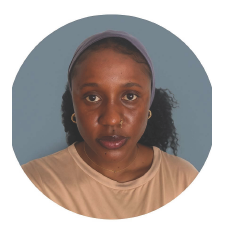
Muniwara Nurudeen
M.S. in Geography
Research Topics: GIScience, environmental data science, and spatiotemporal modeling, with applications in environmental policy, resource governance, and urban resilience.
Muniwara is graduate student in the Department of Geography and Environmental Studies at the University of New Mexico, specializing in GIScience and environmental data science. She holds a bachelor's degree in Geography and Resource Development and Economics from the University of Ghana, where she developed a strong foundation in spatial analysis, resource management, and development policy.
Her master’s thesis research examines the environmental and policy implications of small-scale illegal mining activities in Ghana, with a focus on how these activities affect land use, ecosystems, and local communities. Using GIS, remote sensing, and policy analysis, she assesses the spatial extent of mining impacts and evaluates the effectiveness of regulatory interventions. This work contributes to broader debates on sustainable resource governance, environmental justice, and community livelihoods in resource-dependent economies.
Her professional experience includes working as a GIS Analyst with UNM’s Geospatial and Population Studies and serving as a Graduate Assistant teaching GIS and World Regional Geography. These roles have strengthened her technical expertise and deepened her commitment to applied research.
Her long-term goal is to pursue a Ph.D. in Geography, advancing interdisciplinary research that integrates GIScience with environmental governance and development policy to address pressing global challenges.
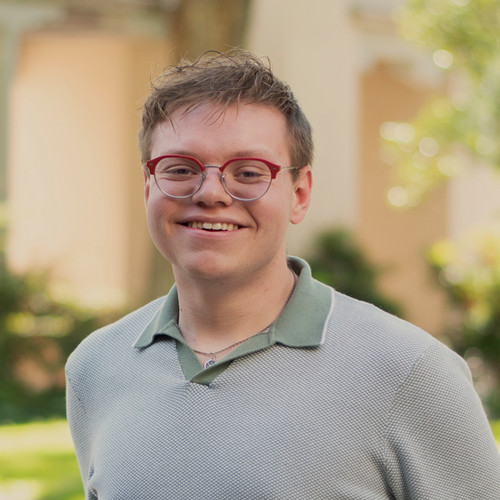
Patrick Baca
M.S. in Biology, concentration on Ecology and Evolution
Research Topics: Ecology, evolution, population genetics, behavioral ecology, thanatology, museum sciences, environmental anthropology, human health, traditional ecological knowledge, andenvironmental justice.
Patrick Baca is a second-year master’s student in biology, where he studies ecology, evolution, and environmental genetics.Raised in a Nuevomexicano family in central New Mexico, he grew up hearing stories about the cultural ties to the land, sparking an early interest in how humans and ecosystems shape one another. His research bridges anthropology and biology, with projects spanning from theconservation genetics of endangered fishes in the US-México borderlands to the socio-ecological changes in the South Pacific. In the archipelagic nation of Vanuatu, he collaborates on projects about death practices, social andgovernmentalchange, environmental disruptions, alongside human health and development. At home, his MS thesis focuses on how anthropogenic changes in the Gila River Basinimpact the ecology and evolution of the Loach Minnow (Tiarogacobitis). He aims tocreate scientific spaces dedicated tohighlighting diversity, justice, environmental thinking, and interdisciplinary collaboration, especially for historically underrepresented groups in STEM and the communities scientists work alongside.
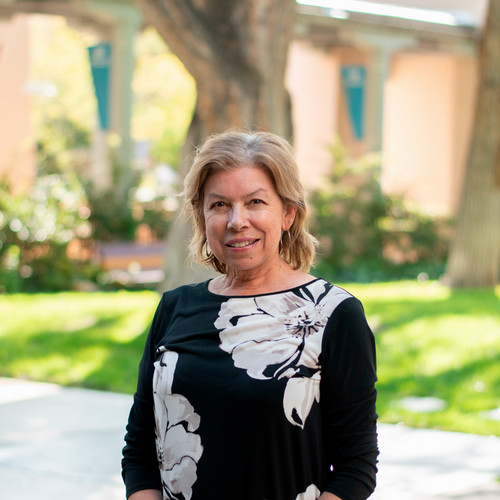
Sandra Marroquín-Evans
PhD in Spanish and Portuguese, concentration in Southwest Studies
Research Topics: Integrating renewable energy sources, expanding the bandwidth of piezoelectric energy harvesters. Piezoelectric Energy Harvesters for small-scale applications, Airborne Wind Energy System Test Site Analysis, and Rural Applications for Distributed Wind Energy Systems.
Sandra Marroquín-Evans was born and raised during a disturbing political time in Guatemala. She is a first-generation graduate at the University of New Mexico, UNM, where she received her bachelor's degree followed by a master’s degree in Southwest studies in the Spanish and Portuguese Department. She was the recipient of the 2024-2025 Susan Deese Roberts TA of the Year Award, and is currently a Spanish as a second language, SSL, TA in the Spanish and Portuguese Department. Sandra first arrived in the US at the cosmopolitan city of Chicago where she lived with her family for ten years. While in Chicago, she worked at the Chicago Board of Trade and attended several community colleges including the University of Illinois at Chicago, UIC, where she studied sociology and psychology. She then moved to Dallas, the glass city, for four years, where she worked as a volunteer coordinator with La Voz Del Anciano, an incredible nonprofit organization serving the Spanish speaking elderly in the community. She also attended the University of Texas at Dallas, UTD, before discovering the Land of the Enchantment, New Mexico. She is passionate about community, stories, teaching and learning. She believes in the power of art through storytelling, dance, photography, theatre, radio, film and any expression of the political self. She is a proud mother of twins, two MILAGRITOS in her life, Liam and Gabby. She is lucky to share and talk to her phenomenal 97-year-old mother, Candida Rosa, about life and her academic journey, an amazing inspiration.
Soumitra Palit
Ph.D Student, MSN, BAN, RN
Research Topics: Postpartum, Hispanics, Latina/o/x, Health Outcomes, Community Health Workers/Promotoras
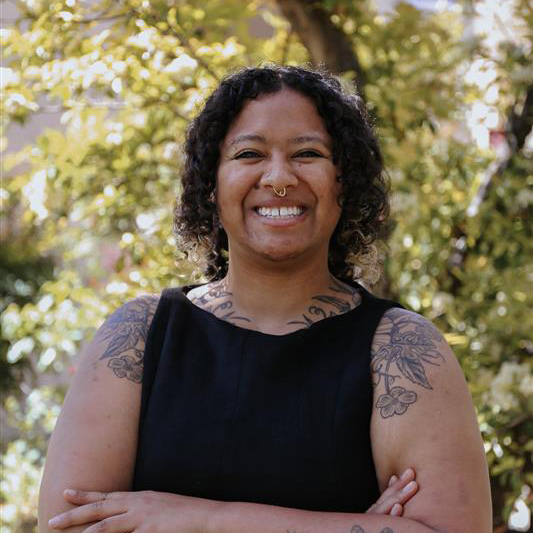
Tiziana Friedman
PhD student, American Studies
Research Topics: Tabletop role-playing games, popular culture, Black/queer feminist methods
Tiziana is pursuing a PhD in American Studies at the University of New Mexico. They graduated from UNM with a double bachelor’s in Women, Gender, and Sexuality Studies and Africana Studies with a minor in American Studies in 2025. As an undergraduate student, Tiziana explored their interests in the intersections of Black and Queer Studies through conference paper presentations on topics such as queer love in River Solomon’s The Deep, the gender binary in Octavia Butler’s oeuvre, and compulsory heterosexuality and Black representation in the television series Steven Universe. Their graduate research interests include “anti-disciplinarity” as fugitive imagination in literature, art, and visual culture, focusing on tabletop role-playing games (TTRPGs) and their ability to expand our ability and capacity to imagine and realize better ways of being together and existing otherwise, or worldmaking.
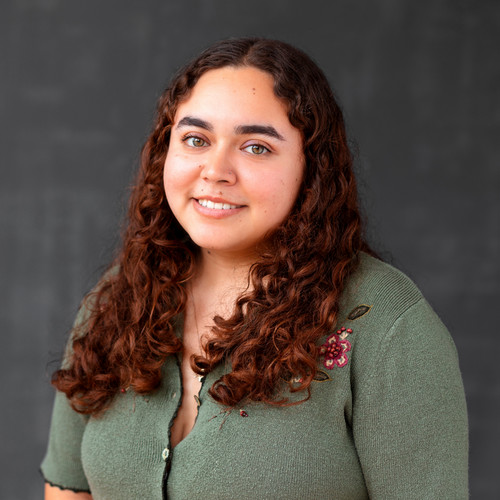
Tzetza Rosas-Perez
PhD in American Studies
Research Topics: The development of undocumented communities (cultural, environmental, relational) in the American Southwest through the usage of mutual aid methods.
Tzetza is an incoming first-generation undocumented first-year PhD student in the American Studies program at the University of New Mexico. She was born in Michoacan, Mexico, but was raised in Las Vegas, Nevada, for the majority of her life, which has influenced her interest in Southwest Studies. Before UNM, she completed a B.A. at Oberlin College with a double major in Environmental Studies and highest honors in Comparative American Studies. Tzetza’s current research interest explores the cultural and environmental development of the undocumented community in relation to mutual aid. Through her academic work, she hopes to highlight the role that mutual aid resources have had in the creation of communities of care for undocumented and disenfranchised communities whose often invisible labor carries Las Vegas’s tourism economy. Growing up in a mixed-status family, she had family members who worked within the tourist economy as service workers. Tzetzawitnessed how, even though Las Vegas gained so much economically and culturally from having this labor, the people providing it rarely got anything in return aside from minimum wage jobs. It was through this lived experience that she realized the amount of community support that goes into surviving without aid from institutions. Tzetza hopes to continue working on highlighting the modes of mutual aid that are taking place in Las Vegas through community-based research. She wants to include the community in the process to continue giving credit to the work that community members do. As she makes my way through my doctorate program, Tzetza hopes to one day become a professor and inspire other undocumented, first-generation students of color to see academia as a potential road for them to take.